
You wrote a book. Now everyone tells you that you have to market it, and the moment you ask what that costs, the answers fall apart. One person spent fifty dollars and hit a bestseller list. Another spent fifteen thousand and barely moved. A freelancer quotes you one thing, an agency quotes you ten times that, and a forum thread insists the whole effort is free if you just post enough. None of it tells you what you actually need to know, which is what you should spend on your book.
The reason the question has no clean answer is that book marketing is not one thing. It is a stack of separate jobs: a cover that sells, a description that converts, reviews that build trust, ads that buy attention, email that you own, PR that earns credibility, and the production work behind a trailer or a website. Each has its own price, its own payoff, and its own risk of being a complete waste. Ask "how much does book marketing cost" and you are really asking "how much do a dozen different things cost, and which ones do I actually need?"
This guide answers that honestly. It breaks down the real cost drivers, compares doing it yourself against hiring a freelancer or an agency, and walks channel by channel through what each piece tends to cost. It gives realistic launch and monthly ranges, names the places authors most reliably burn money, and, most importantly, shows you how to set your budget from your own book's economics rather than someone else's price list. The numbers here are ranges, not promises. Markets, currencies, and vendors vary. But by the end you will be able to build a budget that fits your book instead of guessing.
In a Nutshell
- Book marketing is not one cost, it is many. Cover, description, reviews, ads, email, PR, and production each carry their own price. There is no single number, which is exactly why generic answers feel useless.
- The big lever is who does the work. Doing it yourself costs mostly time. Freelancers cost more but save you the learning curve. Agencies cost the most and make sense only when the spend and stakes justify them.
- Most of the budget should sit close to a sale. Ads, email, and reviews are nearer to a purchase than a trailer or a broad awareness push. Fund the near things first.
- Ads are paid research before they are profit. A few dollars a day on Amazon or Meta, treated as data collection, beats a big blast you cannot read or control.
- The biggest waste is traffic to a page that cannot convert. A weak cover, thin description, or zero reviews turns every paid click into money lost. Fix the page before you buy attention.
- Set the budget from your book's economics. Your royalty per copy sets the ceiling on what you can pay to win a sale. Your goal, profit or launch, sets how aggressive you can be.
- Tiers are useful, precision is not. Under five hundred dollars, a few hundred to a couple thousand, a couple thousand to ten thousand, and beyond each buys a different scope. Pick the tier your return can support.
Table of Contents
- Why There Is No Single Price
- The Real Cost Drivers
- DIY vs Freelancer vs Agency
- Channel by Channel: What Each Piece Costs
- Realistic Launch and Monthly Budgets
- What You Get at Each Budget Tier
- The Biggest Money-Wasters
- How to Budget From Your Book's Economics
- A Sane Way to Allocate Whatever You Have
- The Bottom Line
- Frequently Asked Questions
Why There Is No Single Price
When someone asks the cost of a car, the honest answer is a range, because a car is a category, not a product. A book marketing budget works the same way. The phrase covers a hatchback and a supercar and everything between, so any single figure is either meaningless or misleading.
Three things make the spread enormous. The first is scope. One author needs only a sharper description and a small ad budget. Another wants a national PR campaign, a produced trailer, a new website, and paid media across three platforms. Those are not the same purchase, and pretending they cost the same number helps no one.
The second is who does the work. The identical task, setting up and running an ad campaign, can cost almost nothing if you learn it and run it yourself, a moderate fee if you hire a freelancer, or a premium if an agency manages it as part of a wider strategy. The work is the same. The price reflects the expertise and the time you are buying, not the task.
The third is your book's own economics. A book that earns you a few dollars per copy can justify only a modest acquisition cost per sale before each sale stops making sense. A book that feeds a course, a speaking career, or a series where later titles earn the money back can justify spending far more up front. So the "right" budget is not a market rate at all. It is a function of what each reader is worth to you.
This is why we will not hand you one number. Instead we will give you the parts, the ranges for each, and a method to assemble a budget that fits your specific situation. Honest ranges you can reason about are worth far more than a confident figure that happens to be wrong for you.
The Real Cost Drivers
Before the channel-by-channel detail, it helps to see the handful of forces that actually push a book marketing budget up or down. Almost every quote you will ever get is some combination of these.
- The state of your book page. This is the quiet driver behind everything. If your cover, description, and reviews already convert, every dollar of marketing works harder and you need less of it. If they do not, you will pour money into traffic that never becomes sales, which makes the whole effort cost more for less. The page is upstream of every other cost.
- How much you do yourself. Time is the currency most authors forget to count. Every task you take on yourself is money saved and hours spent. Every task you hand off is money spent and hours saved. Your budget is really a trade between the two, and the right trade depends on what your time is worth and what you are good at.
- The channels you choose. Some channels are cheap to start and scale with spend, like Amazon and Meta ads. Some are mostly time, like email and organic social. Some carry real production costs, like a trailer, a website, or professional PR. A budget built on production-heavy channels looks nothing like one built on ads and email.
- Your goal. Selling for profit on a single title forces a tight budget tied to margin. Launching a debut, building reviews, or seeding a series lets you spend more aggressively because the return shows up later or elsewhere. The same author with two different goals should set two different budgets.
- Your timeline. A compressed launch where you want maximum noise in a two-week window costs more per result than a steady, patient effort spread over months. Urgency is expensive. Patience is cheap.
- Your market and genre. Competitive genres have pricier ad auctions and noisier PR landscapes. A crowded thriller or romance category will cost more to break into than a quiet niche where a few well-placed dollars go a long way.
Read those again and you will notice most of them are choices, not fixed prices. That is the encouraging part. You have more control over what book marketing costs than the scary quotes suggest, because most of the cost is decided by how you scope the work, not by some external rate card.
DIY vs Freelancer vs Agency
The single biggest fork in your budget is not which channel you pick. It is who executes the work. The same campaign can cost wildly different amounts depending on whether you run it, a freelancer runs it, or an agency runs it, so it is worth understanding what each path actually buys.
Doing it yourself costs mostly time and a little money for tools and ad spend. You learn the channels, set up the campaigns, write the copy, and manage the work. The advantage is not only that it is cheap. It is that you learn what genuinely moves your book, which makes every future dollar smarter, whether you keep doing it yourself or eventually hand it off. The cost is real, though, and it is your hours and your attention, often during the same period you are trying to write the next book. DIY is the right starting point for most authors with more time than money, and for anyone who wants to understand their own marketing before they pay someone else to do it.
Hiring a freelancer sits in the middle. You pay someone who already knows a specific job, an Amazon ads specialist, a Meta ads buyer, a publicist, a designer, to do that one thing well. You skip the learning curve and the setup mistakes, and you keep more control than with a full agency. The trade is that you are coordinating several specialists yourself and stitching their work into a coherent plan. Freelancers make sense when you know which specific gap you need filled and you would rather buy the expertise than build it.
Engaging an agency is the most expensive path and buys the most. A good agency does not just run one channel. It builds the strategy, manages paid media, handles PR, produces creative, and ties it all together so the pieces reinforce each other, while you stay focused on writing. The cost reflects all of that, plus the time it saves you. The honest test for whether an agency is worth it is simple: can it plausibly create more value than it charges? Early on, when spend is small and you have time, the answer is often no, and you are better served doing it yourself or hiring a freelancer for a specific job. Once the spend, the stakes, and the complexity are high enough, a strong agency can pay for itself several times over. It is a stage decision, not a status symbol.
Here is the trade-off at a glance:
| Path | What it mainly costs | Best for | The real trade |
|---|---|---|---|
| Do it yourself | Your time, plus tools and ad spend | Authors with more time than money, anyone learning their marketing | Cheapest in cash, expensive in hours and attention |
| Freelancer | A moderate fee per specialist | A specific known gap: ads, PR, design | You buy expertise but coordinate the pieces yourself |
| Agency | A premium for strategy and management | High spend, high stakes, complex multi-channel launches | Most expensive, but buys strategy, execution, and your time back |
Notice that none of these is "best." They are a progression that tends to follow your stage. Many authors start by doing it themselves, hire freelancers for the jobs they cannot do well, and bring in an agency only when the scale finally justifies it. Spending up the ladder before you are ready is one of the most common ways authors overspend.
Channel by Channel: What Each Piece Costs
Now the detail. Below is what each common piece of book marketing tends to cost and, just as important, what it is actually for. Treat every figure as a rough range. Prices vary by country, currency, vendor, and quality, and they move over time. The point is the relative scale and the logic, not precision.
Cover and blurb. This is not really marketing, but it is the foundation marketing stands on, so it belongs here. A professional cover is one of the highest-return things an author can pay for, because on every store and in every ad, the cover is the creative. Costs range widely, from budget pre-made covers at the low end to several hundred dollars or more for a strong custom design, and higher still for premium illustrators. A sharp, professionally edited book description, or blurb, can be bought from a specialist copywriter for a modest fee and often pays for itself in conversion. If you spend on nothing else, spend here first. A weak cover makes every other dollar work less.
Author website. A simple, clean author site is a one-time-ish cost: a domain, hosting, and either your time on a template or a few hundred dollars and up if you pay someone to build it. It is not a sales engine on its own, but it is where your email signups live and where press and readers go to learn about you. Keep it lean. An expensive, elaborate site is rarely where a debut author's money is best spent.
Email tools. Email is the audience you own, and it is one of the best-value channels in all of marketing because the cost is low and the people on the list asked to hear from you. Most email platforms are free or cheap at small list sizes and scale up as your list grows. The real cost of email is the time to build the list and write to it, not the software. For most authors this is a small monthly line item that punches far above its weight.
Advance review copies and review services. Honest reviews are social proof, and social proof converts. Running an advance review copy team, getting your book to real readers who will post honest reviews around launch, can cost very little if you organize it yourself, or more if you use a paid ARC distribution service to reach readers at scale. Separately, there are reputable editorial review services that charge a reading fee for an honest professional assessment you can quote. What you must never buy is fake or guaranteed positive reviews. They violate retailer rules, risk penalties, and fool no one. The legitimate spend here is on access to real readers, not on ratings.
Promotional newsletter features. Genre-specific email newsletters that feature discounted or free books to large reader lists are a staple of indie launches, especially for a price-drop promotion. Individual feature placements span a wide range, from a few dollars for a small newsletter to a few hundred dollars for the largest and most selective ones, with most useful options falling somewhere in between. The well-known, highly selective services sit at the top of that range and are competitive to get into. Stacking several of these around a price promotion is a classic, measurable indie tactic, and because each placement has a fixed price and a trackable result, it is one of the easier spends to evaluate.
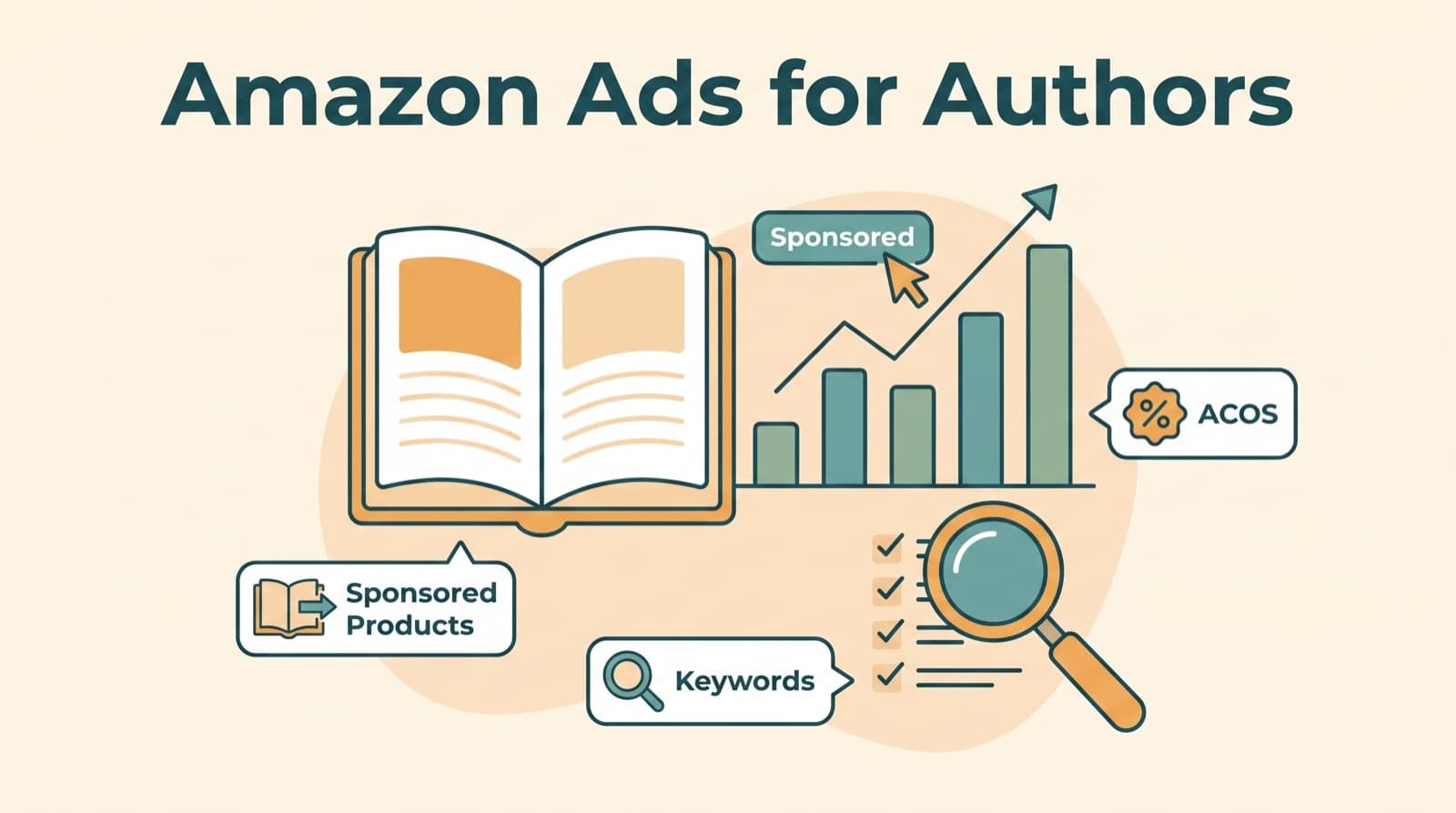
Amazon ads. Amazon ads put your book in front of people already shopping for one, which is why they convert well. They run on a pay-per-click model, so you control spend tightly. A sensible starting daily budget is in the range of a few dollars to ten dollars per book while you gather data, scaling only what proves it converts. The first month is best treated as paid research rather than a profit center. For the full mechanics of setting these up and reading the numbers, our guide to Amazon Ads for Authors walks through it from zero. The cost of Amazon ads is whatever you set it to. The skill is in spending it well.
Meta ads (Facebook and Instagram). Meta ads reach readers by interest and behavior rather than by active search, which makes them powerful for building awareness, growing an email list, and supporting a launch, but also easier to waste if the targeting and creative are loose. Like Amazon, they can start small, in a similar few-dollars-a-day testing range, and scale with what works. The danger is spending on broad reach with no clear path to a sale, which is why a tight audience and a real offer matter more than the budget size. Used well alongside organic effort like Instagram growth for authors, paid social can compound rather than just drain.
Book trailer. A book trailer can range from nearly free if you assemble it yourself from stock footage and simple editing, to several hundred or several thousand dollars for a professionally produced one. Be honest about the return. Trailers are awareness assets, sitting further from a sale than ads or email, and a poorly made one can do more harm than good. For most authors this is a "later, if at all" spend, not a launch priority. Spend on it only once the things closer to a sale are working.
PR and publicity. Professional book publicity, getting your book reviewed, featured, and you interviewed, is among the most expensive line items, because you are paying for relationships, pitching, and time. Freelance publicists and PR firms typically charge meaningful monthly retainers or per-campaign fees, often in the thousands, and the results are earned rather than guaranteed. PR builds credibility and awareness more than it directly drives trackable sales, so it suits authors with the budget and a goal where authority matters. It is rarely the first dollar a debut author should spend, and almost never the only one.
To see these side by side:
| Channel | Rough cost scale | What it is really for | When to prioritize it |
|---|---|---|---|
| Cover and blurb | Low to several hundred dollars and up | The foundation all marketing stands on | First, always |
| Author website | Low one-time, plus small hosting | A home base for email and press | Early, but keep it lean |
| Email tools | Free to small monthly | The audience you own | Early, highest value over time |
| ARC and review access | Low if self-run, more at scale | Honest social proof around launch | Before and during launch |
| Promo newsletters | A few dollars to a few hundred per feature | Trackable sales spikes on a price drop | At launch and for price promos |
| Amazon ads | A few to ten-plus dollars a day to start | Reaching active book buyers | Once the page converts |
| Meta ads | A few dollars a day to start | Awareness, list growth, launch support | Alongside organic, with tight targeting |
| Book trailer | Near free to several thousand | Awareness, further from a sale | Later, if at all |
| PR and publicity | Often thousands per campaign | Credibility and earned media | When budget and goal justify it |
The pattern worth absorbing: the cheapest, highest-leverage items, the page itself, email, reviews, and well-run ads, are also the closest to a sale. The most expensive items, PR and produced creative, sit further from the purchase. That is not a coincidence, and it should shape the order in which you spend.
Realistic Launch and Monthly Budgets
Authors usually want two numbers: what a launch costs and what ongoing marketing costs. Both are ranges, and both depend almost entirely on how much you do yourself and how aggressive your goal is. With that caveat firmly in place, here is a realistic picture.
A lean, self-run launch can come in at a few hundred to a couple of thousand dollars. That typically covers a solid cover, a sharp description, a handful of promotional newsletter placements timed around a price promotion, an ARC effort you organize yourself, and a modest ad budget on Amazon and perhaps Meta. You are spending mostly on traffic and social proof, doing the coordination yourself, and treating ads as research. This is enough to give a good book a real, measurable shot.
A mid-tier launch commonly runs into the low-to-mid thousands. Here you add freelance help where you have gaps, a sustained paid media budget across the launch window rather than a token one, possibly a small PR effort, and better creative. You are buying back some of your time and some expertise, and pushing harder on the channels that work.
A full, agency-managed launch can reach five figures or well beyond. This buys strategy, multi-channel paid media managed by specialists, professional PR, produced creative, and the coordination of all of it, while you focus on being the author. It suits books with the economics or the surrounding business to justify the spend, not a debut hoping to break even on copy sales alone.
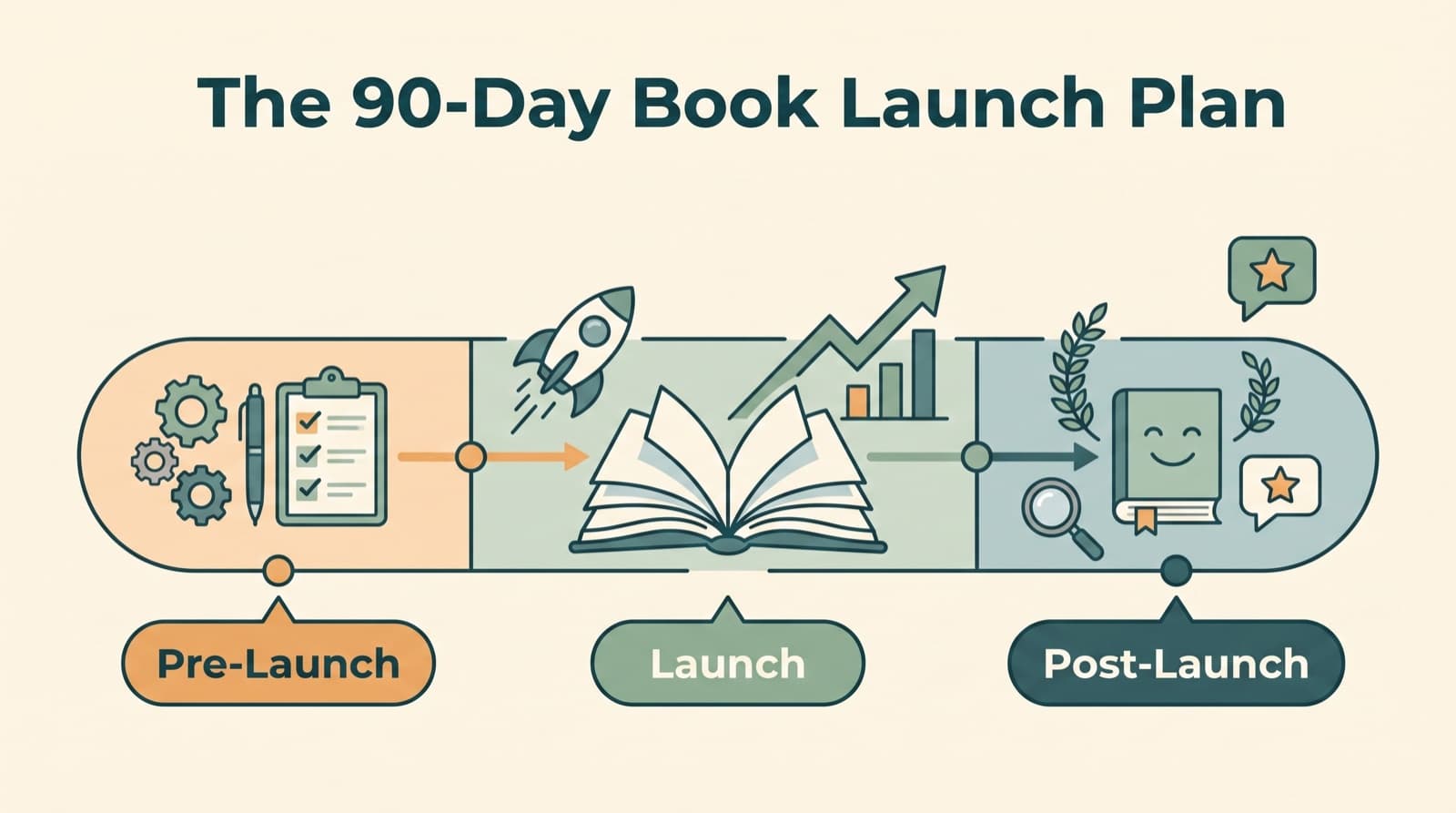
For ongoing monthly marketing, the same logic scales down. An author maintaining momentum themselves might spend a small, steady monthly amount on email tools and an always-on ad budget, plus their time. An author paying for managed ads or a freelancer adds that fee on top. An author on an agency retainer is in a different bracket entirely. The structuring of all this, what to spend when and in what order, is exactly what a deliberate plan like our 90-Day Book Launch Marketing Plan is built to sequence, so the money lands where it matters at each phase rather than all at once.
The honest summary: there is a credible version of book marketing at almost any budget, from a few hundred dollars to tens of thousands. What changes across that range is not whether you can market the book, but how much you do yourself, how fast you move, and how much reach you can buy. None of these tiers is more "correct" than another. The correct one is the one your book's return can support, which is the subject we come to shortly.
What You Get at Each Budget Tier
It helps to make those ranges concrete. Here is roughly what an author can expect to accomplish at each broad budget tier. Think of these as scopes, not guarantees, and remember that a smaller budget spent with focus often beats a larger one spent loosely.
Under five hundred dollars. This is the focused, do-it-yourself tier, and it is more capable than it sounds. The money goes to the essentials closest to a sale: making sure the cover and description are strong (or fixing them if they are not), a few promotional newsletter placements around a price promotion, and a small Amazon or Meta ad budget treated as paid research. Email costs you mostly time. Your ARC team is people you organize, not a service you buy. At this tier, your discipline is the multiplier. You cannot afford to fund everything, so you fund only what is nearest to a purchase, and you spend your own hours on the rest. A genuinely good book with a sharp page can do real numbers here.
Five hundred to two thousand dollars. Now you can do the essentials and push harder. You can sustain a real ad budget through a launch instead of a token one, stack more newsletter features, pay for a paid ARC distribution to reach readers at scale, and bring in a freelancer for one specific job you cannot do well, often the cover or the ad management. This tier is where a self-run launch starts to feel like a campaign rather than a few scattered tactics. The constraint shifts from "what can I afford to do at all" to "where does each additional dollar do the most good."
Two thousand to ten thousand dollars. Here you can buy meaningful expertise and reach. This tier supports managed paid media across multiple channels, a small PR effort, professional creative, and freelance or part-agency help to coordinate it. You are no longer doing everything yourself, which frees you to write, and you can run a genuinely multi-channel launch with the pieces reinforcing each other. The risk at this tier is spending on the impressive-looking things, big awareness pushes, produced trailers, before the converting things are nailed, so the order still matters as much as the amount.
Ten thousand dollars and up. This is full-scale, professionally managed marketing: comprehensive strategy, multi-channel paid media at volume, serious PR, polished creative, and ongoing optimization, typically agency-run. It makes sense for authors with the book economics or the surrounding business, a course, a brand, a series, a speaking career, to earn it back, and far less sense for a standalone title hoping to profit on copy sales. At this level the question is never "can I market the book" but "is the expected return big enough to justify this," which is, once again, a question about your book's economics rather than the marketing menu.
The thread running through all four tiers is the same. More money buys more reach, more expertise, and more of your time back. It does not buy a different set of fundamentals. Every tier still rests on a page that converts, social proof, and spend pointed close to a sale. Skip those and a big budget simply loses money faster.
The Biggest Money-Wasters
Knowing what to spend on is only half of it. Knowing what not to spend on protects the budget you have. These are the most reliable ways authors lose money in book marketing, in rough order of how often they do real damage.
Driving traffic to a page that cannot convert. This is the costliest mistake by a wide margin, because it quietly poisons every other spend. You pay for ads, a PR hit, or a newsletter blast, and the people arrive at a listing with a weak cover, a flat description, or no reviews, so almost none of them buy. You did not waste money on the traffic. You wasted it by sending traffic somewhere that could not close. Always fix the cover, description, and reviews before you buy attention. Marketing amplifies whatever is already there, including a page that does not work.
Spending on awareness before anything closer to a sale is working. A produced book trailer, a broad brand-awareness campaign, an expensive launch party. These feel like marketing and sit far from an actual purchase. They can be worth it later, but funding them before your ads, email, and reviews are converting is spending at the wrong end of the funnel. Money belongs near the sale first.
Paying for vanity. Follower-count packages, engagement pods, and anything that buys numbers rather than readers. A bigger follower count that does not convert is a more expensive way to look successful, not a way to sell books. The same goes for chasing reach as a metric. Reach that never approaches a purchase is a cost, not a result.
Paying for reviews. Buying fake or guaranteed-positive reviews is both a waste and a risk. It violates retailer policies, can get your book penalized, and readers spot manufactured praise. Spend on access to real readers instead, through ARCs and reputable editorial services that charge a reading fee for an honest assessment. Never spend on the rating itself.
Big, untargeted ad blasts. Pouring money into broad social ads with loose targeting and no clear offer is how budgets vanish with nothing to show. The fix is not more money, it is tighter targeting, a real offer, and starting small enough to read the data before you scale. An ad you cannot measure is an ad you cannot improve.
Buying up the ladder too early. Hiring a full agency, or expensive specialists, before the spend and stakes justify it means paying premium prices for work you could do yourself while you are still learning what moves your book. There is a right time to bring in paid help. It is when the scale finally makes the value exceed the fee, not before.
Avoiding these is not about being cheap. It is about sequence. Spend on the page first, then on the channels closest to a sale, then on reach and awareness, and bring in paid help when the scale earns it. Authors who lose money in book marketing almost always did the order backward, funding reach and prestige before the fundamentals that turn attention into sales.
How to Budget From Your Book's Economics
Here is the part most cost guides skip, and it is the only part that actually tells you what to spend. Your budget should come from your book's own economics, not from a market rate or what another author did. Two numbers drive it: your royalty per copy and your goal.
Start with your royalty per copy. This is what you actually keep when someone buys your book, after the retailer takes its cut and after any per-copy production cost. It is not the cover price, and the gap matters. An ebook might net you a few dollars. A print book often nets less per copy than authors expect once printing and retailer margins come out. Whatever it is, that number is the foundation, because it sets the ceiling on what you can pay to win a single sale and still come out ahead.
Translate that into a break-even on acquisition. If you keep, say, three dollars per copy, then spending three dollars in ads to make one sale is break-even, and spending less than that is profit. This is the same logic behind ACOS in Amazon Ads for Authors: your spend-to-sales ratio only makes sense judged against your margin. Once you know your royalty per copy, you can look at any channel and ask the only question that matters, is each dollar in earning more than a dollar back?
Then let your goal move the ceiling. Break-even on the first sale is the strict case, and it applies when you are selling a single title purely for profit. But many authors are not in that case. If you are launching a debut and need early reviews and ranking, seeding the book at break-even or even a controlled loss can be rational, because the early traction lifts everything that follows. If you sell a series, the first book is a customer-acquisition cost and the later books and page reads earn the money back, so you can spend more to win that first reader. If the book feeds a business, a course, consulting, speaking, a single sale can be worth many times its cover price, which justifies a budget that would be reckless for a standalone title. Your goal is what tells you how far above strict break-even you can responsibly go.
Put a real ceiling on the whole campaign, too. Beyond per-sale math, decide the total you are willing to risk, and treat it as risk capital, not guaranteed return. Marketing is not a vending machine. A sensible approach is to commit an amount you can afford to lose entirely, spend it in small, measurable increments, kill what does not work quickly, and pour the rest into what does. That way a campaign that underperforms costs you a known, survivable amount, and one that works tells you exactly where to put more.
Budget this way and the abstract question of cost becomes concrete. You stop asking "how much does book marketing cost" and start asking "given that I keep this much per copy and my goal is that, how much can I spend per sale and in total, and which channels clear that bar?" That is a question with a real answer, and it is yours, not the market's.
A Sane Way to Allocate Whatever You Have
Once you know your ceiling, you have to split it. Whatever the total, a sensible order of operations keeps you from the classic mistake of funding reach before the fundamentals. Here is a defensible way to allocate, from first dollar to last.
- Fix the page before anything else. If your cover, description, or reviews are weak, the first money goes there, full stop. This is not marketing spend you can recover later, it is the precondition for any marketing working at all. A strong cover and a sharp blurb make every subsequent dollar more efficient.
- Fund the channels closest to a sale next. Email setup, a small managed ad budget on Amazon, and an ARC effort for honest reviews. These sit nearest to a purchase and give you the clearest, fastest read on what is working. Spend here before you spend on reach.
- Add measured reach once the near channels convert. Promotional newsletter features around a price promotion and tightly targeted Meta ads to grow your list and support a launch. Fund these once you have evidence the basics convert, so you are amplifying something that works rather than something that does not.
- Hold back a reserve for winners. Do not allocate every dollar up front. Keep a portion in reserve so that when a keyword, an audience, or a creative proves it converts, you have budget ready to scale it. The whole point of treating early spend as research is to act on what it teaches you.
- Spend on awareness and prestige last. Trailers, broad PR, and big brand pushes come after the converting machinery is running, and only if your goal and budget justify them. They are the top of the funnel and the furthest from a sale, so they earn their place only once everything beneath them works.
This order is the same regardless of whether your total is five hundred dollars or fifty thousand. The amounts change, the sequence does not. An author who spends a small budget in this order will usually outperform one who spends a larger budget backward, because every dollar is placed where it can actually turn into a sale. Allocation is where a budget becomes a strategy, and the strategy is simply: page first, near the sale next, reach after that, reserve for what works, prestige last.
The Bottom Line
The reason "how much does book marketing cost" has no clean answer is that it is the wrong question. Book marketing is not one product with a price. It is a stack of separate jobs, each with its own cost and payoff, and the real question is which of them your book needs and what each is worth to you.
Here is the whole thing, distilled:
- There is no single price, because there is no single thing. Cover, email, reviews, ads, PR, and production each cost differently and serve differently. Generic numbers fail because they average things that should never be averaged.
- Who does the work is the biggest lever. DIY costs time, freelancers cost a fee for expertise, agencies cost a premium for strategy and saved hours. Move up that ladder only when the scale earns it.
- Spend close to the sale first. The page, email, reviews, and well-run ads are cheap, high-leverage, and near a purchase. Trailers, prestige PR, and broad awareness are expensive and far from it. Order matters as much as amount.
- The biggest waste is traffic to a page that cannot convert. Fix the cover, description, and reviews before you buy a single click, or you are paying to send readers somewhere that cannot close them.
- Budget from your own economics. Your royalty per copy sets the ceiling on what you can pay per sale. Your goal, profit, launch, or series, sets how far above break-even you can responsibly go.
- Pick the tier your return can support. From a few hundred dollars to five figures and beyond, there is a credible version of book marketing at every level. The right one is the one your book can pay back, not the most impressive one you can imagine.
Do that and the cost stops being a mystery and starts being a decision. You will know what you are spending, why, and what it has to earn back, which is the only honest way to budget for marketing a book.
Aurelius Media runs book marketing for authors and publishers: launch strategy, paid media on Amazon and Meta, PR, and the book-page and creative work that makes every dollar of spend actually convert. You write the book. We build a budget around your book's real economics and put the money where it earns. If you want us to look at what your book actually needs to spend, and where it might be wasting money already, book a free strategy call.
Frequently Asked Questions
How much does book marketing cost on average?
There is no single average, because book marketing is a bundle of separate things, not one product. A self-published author doing the work themselves might spend a few hundred dollars on tools, ads, and a promo service or two. An author paying freelancers and running steady ads through a launch often lands somewhere in the low thousands. A full agency-run campaign with PR, paid media, and creative can run well into five figures. The right number is not an average, it is whatever you can spend and still earn back given your book's royalty per copy and your goals. Start from your own economics, not someone else's price list.
Can I market a book on a small budget?
Yes, and many authors do. The highest-leverage early moves cost little or nothing: a sharp book description, an email list you build for free, advance review copies sent to readers who will post honest reviews, and a small, well-managed Amazon ad budget treated as paid research. You can run a credible launch for a few hundred dollars if you spend your time instead of your money. A small budget rewards focus. Pick the two or three channels closest to a sale and ignore the rest until they are working.
What is the biggest waste of money in book marketing?
Spending on awareness before the book page can convert. A flashy book trailer, a paid blast to a huge untargeted audience, or an expensive PR push all send people to a listing that may have a weak cover, a thin description, and no reviews, so the clicks never become sales. The other classic waste is paying for vanity: follower-count packages, pay-for-review schemes that violate retailer rules, and broad social ads with no clear path to purchase. Fix the cover, description, and reviews first. Then spend on traffic.
Is it worth hiring a book marketing agency?
It depends on your stage and your budget. Early on, when spend is small and you have time, doing the core work yourself teaches you what actually moves your book and keeps costs down. An agency earns its fee when the spend and the stakes are high enough that expert strategy, paid media management, PR relationships, and saved time outweigh the cost, and when the work is genuinely beyond what you can do well alone. The honest test is whether the agency can plausibly create more value than it charges. If it cannot, you are not ready for one yet.
How much should I budget for Amazon and Meta ads for my book?
Start small and consistent rather than large and sporadic. A daily Amazon ad budget in the range of a few dollars to ten dollars is enough to gather real data on one book over a few weeks, and Meta ads can start in a similar range when you are testing. The number that matters is not the budget, it is whether each dollar of spend earns back more than it costs given your royalty per copy. Treat the first month as paid research, cut what does not convert, and only scale the keywords, audiences, and creatives that prove they work.
How do I set a book marketing budget?
Work backward from your book's economics. Figure out your royalty per copy, which is what you actually keep after the retailer and any production costs. That number sets the ceiling on what you can pay to acquire a sale and still come out ahead, at least on the first book. Decide your goal next, because a profit goal and a launch-or-series goal justify very different spend. Then allocate to the channels closest to a purchase first, hold back a reserve for what is working, and treat the budget as something you adjust monthly based on results, not a number you set once and forget.
What does a typical book launch cost?
It ranges enormously depending on how much you do yourself. A lean self-run launch covering a solid cover, a few promo newsletter placements, advance review copies, and a modest ad budget can come in at a few hundred to a couple of thousand dollars. A mid-tier launch that adds freelance help, sustained paid media, and a small PR effort commonly runs into the low-to-mid thousands. A full agency-managed launch with PR, multi-channel ads, and produced creative can reach five figures or more. None of these is correct in the abstract. The right launch budget is the one your book's expected return can support.
Do I need to pay for book reviews?
You should never pay for fake or guaranteed positive reviews. They violate retailer policies, can get your book penalized, and readers see through them. What you can legitimately spend on is getting your book in front of real readers who may review it honestly: advance review copy distribution, reputable editorial review services that clearly disclose they charge a reading fee for an honest assessment, and the time it takes to run an ARC team. The goal is honest social proof at volume around launch, earned through real readers, not bought as a guaranteed rating.